






As always, we have been busy this week and it doesn’t seem that the pace will lessen until we break up at 11.45am next Friday. We are so grateful to Shaan’s parents for leading our assembly on Monday. They taught the children all about dental hygiene, sharing top tips for brushing teeth twice a day and highlighting the importance of choosing foods that support healthy teeth rather than those that cause a ‘sugar bug party’. They have also very kindly donated some dental items for each child — toothpaste and a discolouration tablet to help test how effectively we are brushing our teeth! These will be sent out next week with instructions for the tablet.
We are very much looking forward to the Summer Concert and Prize Giving next Thursday (2 July), which will start at 9.30am in the James Hall at Prep. We do hope you will be able to join us for this special event.
With the long summer holidays approaching, below are some suggestions for supporting your child over but first the awards….
This week the Courtesy Cup and Badge went to Noah (Year 2) for building stronger friendships and showing courteous behaviour to his classmates. Keep up this super progress, Noah!
and Stars of the Week were awarded to:
Year 2: Zaki for being a “Rayee” of sunshine in Year 2! We are so lucky to have Zaki to inspire us with his wonderful knowledge.
Year 1: Rosie for working hard to overcome her challenges whilst also being a brilliant student.
Reception: Eli for his fantastic neat writing about staying safe in the sunshine. Top tips, Eli!
More awards followed the above, and so our congratulations go to:
Reception: Archie for being awarded the 5m swimming badge and to Ozan, Shaan and Roman for being awarded a certificate of achievement from Kiddy Cooks cookery club.
Year 1: Niam for taking part in Drowning Prevention Week and Aarav for excelling at his tennis club.
Year 2: Zayn for completing Stage 4 Swim England.
Supporting Your Child Over the Summer
Many parents have asked for suggestions on how to continue supporting learning over the holiday period, so I thought it would be helpful to include some ideas in this final bulletin of the year for everyone to access. I cannot stress strongly enough how important it is to keep learning enjoyable.
Building confidence and deepening your child’s thinking through everyday experiences will have the greatest impact.
Keep all activities fun and low-pressure. Following your child’s interests – through talking, questioning, and exploring together – will make a real difference but, most importantly, striking a healthy balance between learning, play, and rest will help ensure your child returns in September feeling enthusiastic, confident, and ready to learn.
Encourage independence
Give opportunities for your child to dress themselves, tidy up, prepare simple snacks, and take responsibility for small tasks. Researchers from Harvard concluded that one of the key predictors of adult happiness and success was the development of a strong work ethic – and this was often built through children contributing to everyday tasks at home.
Children who regularly helped with chores were more likely to:
- Develop a sense of responsibility and independence
- Build a strong work ethic and perseverance
- Show greater empathy and teamwork
- Experience higher levels of confidence and self-worth.
Some research has also shown that children who begin helping with simple tasks at a young age (around 3–4 years old) tend to have better outcomes in areas such as relationships, academic achievement, and career success later in life.
Talk, talk, talk
Conversations build vocabulary and confidence. Share stories, discuss outings, and encourage your child to ask and answer questions. Again, research shows that a strong early vocabulary is a key foundation for later success in reading and learning. However, it is not just about the number of words children know — rich conversations, storytelling, and opportunities to use language meaningfully are what truly support long-term development.
Keep reading
- Read together daily (a mix of stories and non-fiction)
- Discuss what you read: Why did the character do that? What might happen next?
- Explore new vocabulary and talk about meanings so children can use exciting new words in their own writing
- Encourage your child to retell or change parts of a story
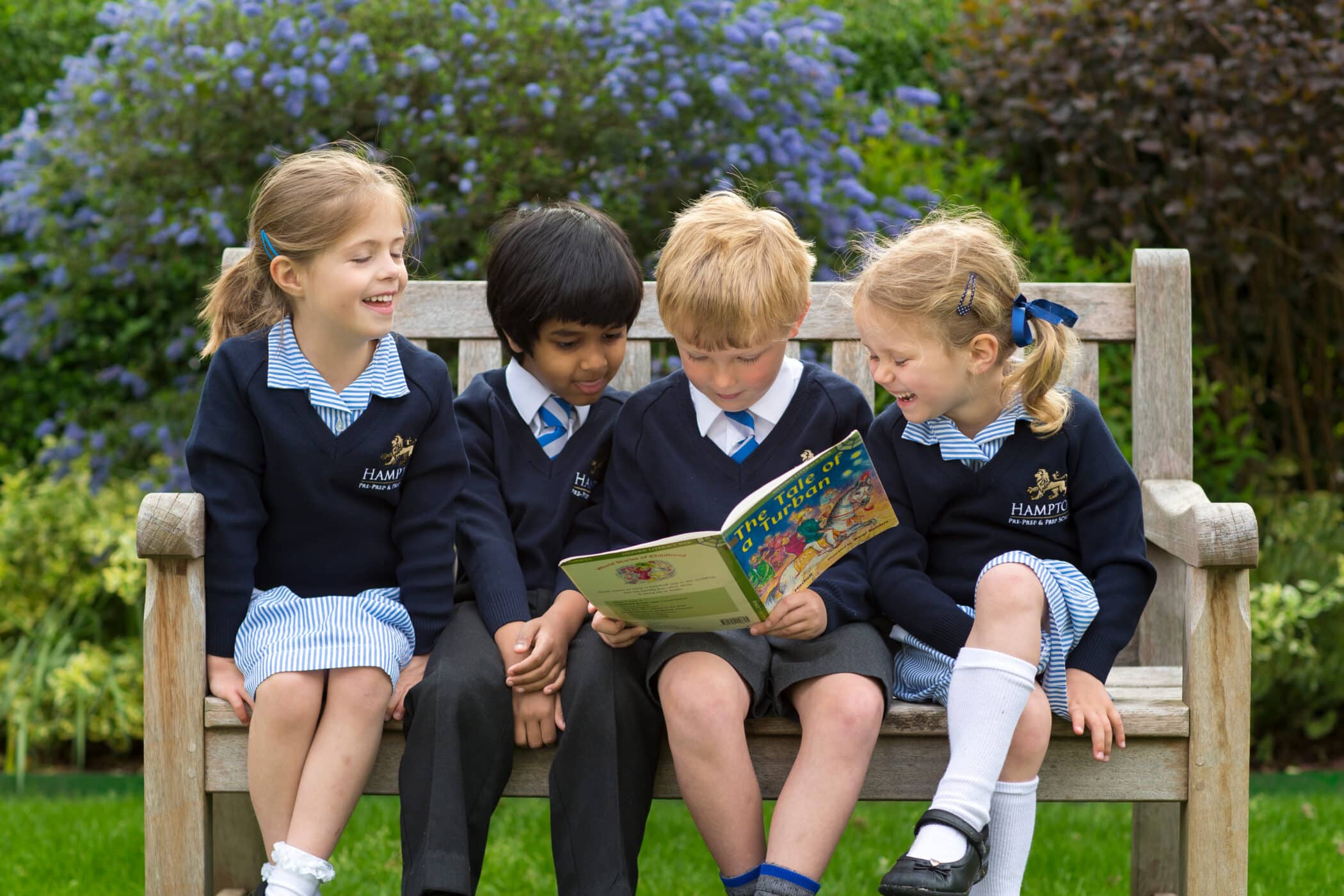
Reading skills are undeniably critical to a child’s success in school, work, and life. Reading aloud plays a vital role in developing these skills. A daily story should be part of life, even for children well beyond the infant stage.
Research consistently shows that reading for pleasure makes a significant difference to children’s educational outcomes. Those who read regularly not only perform better in reading tests, but also develop a broader vocabulary, greater general knowledge, and a deeper understanding of the world around them.
It will come as no surprise that I am a huge fan of picture books. In my view, they are beautifully crafted short stories. There are so many wonderful titles to enjoy and some of my favourites include:
- Anything by Giles Andreae (my absolute favourites!)
- Anything by Julia Donaldson (ditto)
- The Little Zeb series – Caroline Castle and Sam Childs
- The Tiger Who Came to Tea – Judith Kerr
- We’re Going on a Bear Hunt – Michael Rosen
- Elmer – David McKee
- The Very Hungry Caterpillar – Eric Carle
- Lost and Found – Oliver Jeffers
- Handa’s Surprise – Eileen Browne
One of our parents has very kindly sent a link to her company’s Recommended Reads (the bundles are organised by year groups) and the list has recently been updated for 2026-2027.
https://www.expectamazing.co.uk/collections/recommended-reads
Writing for a Purpose
Encourage children to see writing as meaningful and enjoyable rather than a chore. Focus on ideas and enjoyment rather than perfection. For example, keep a simple holiday diary. Write with a focus on neat, legible handwriting: perhaps stories or comics, instructions (e.g. how to build something), invitations, thank you cards and postcards.
Maths in Everyday Life
Use real-life situations: cooking (measuring, sharing), shopping (adding totals, estimating, comparing prices)
Play number and board games (encourage your child to invent their own simple games)
Use card games and dominoes: sort into odd and even numbers, find combinations that make a given total, order numbers from smallest to largest and spot patterns or sequences
Encourage problem-solving: How could we share this equally? Is there another way to solve this?
Explore money: use coins to make different totals and perhaps create a simple board game where children collect coins (e.g. first to 10p, then 20p)
Thinking & Problem Solving
Play strategy games (e.g. chess, Connect 4)
Complete puzzles (jigsaws, number puzzles, logic games)
Ask “what if…?” questions to spark curiosity
Encourage children to explain their thinking and reasoning
Creativity & Exploration
Provide opportunities for: drawing, painting, construction, and model-making, using recycled materials creatively
Explore nature: collect and sort leaves, shells, or stones (compare, group, and describe findings)
Try simple science activities: floating and sinking, mixing colours or observing changes over time
Maintain routines where possible
Consistent sleep and mealtime routines can help children feel secure and ready to return to school in September.
I hope the above helps but please remember the most valuable learning often happens in the simplest moments – shared conversations, curiosity, and time spent together.
We bid a fond farewell to our lovely Year 2 pupils wishing them all the luck in the world wherever their next learning journey takes them – more about them next week at Prize Giving!
Wishing you all a restful, happy, and fun-filled summer break – we look forward to welcoming everyone back refreshed for the new school year.