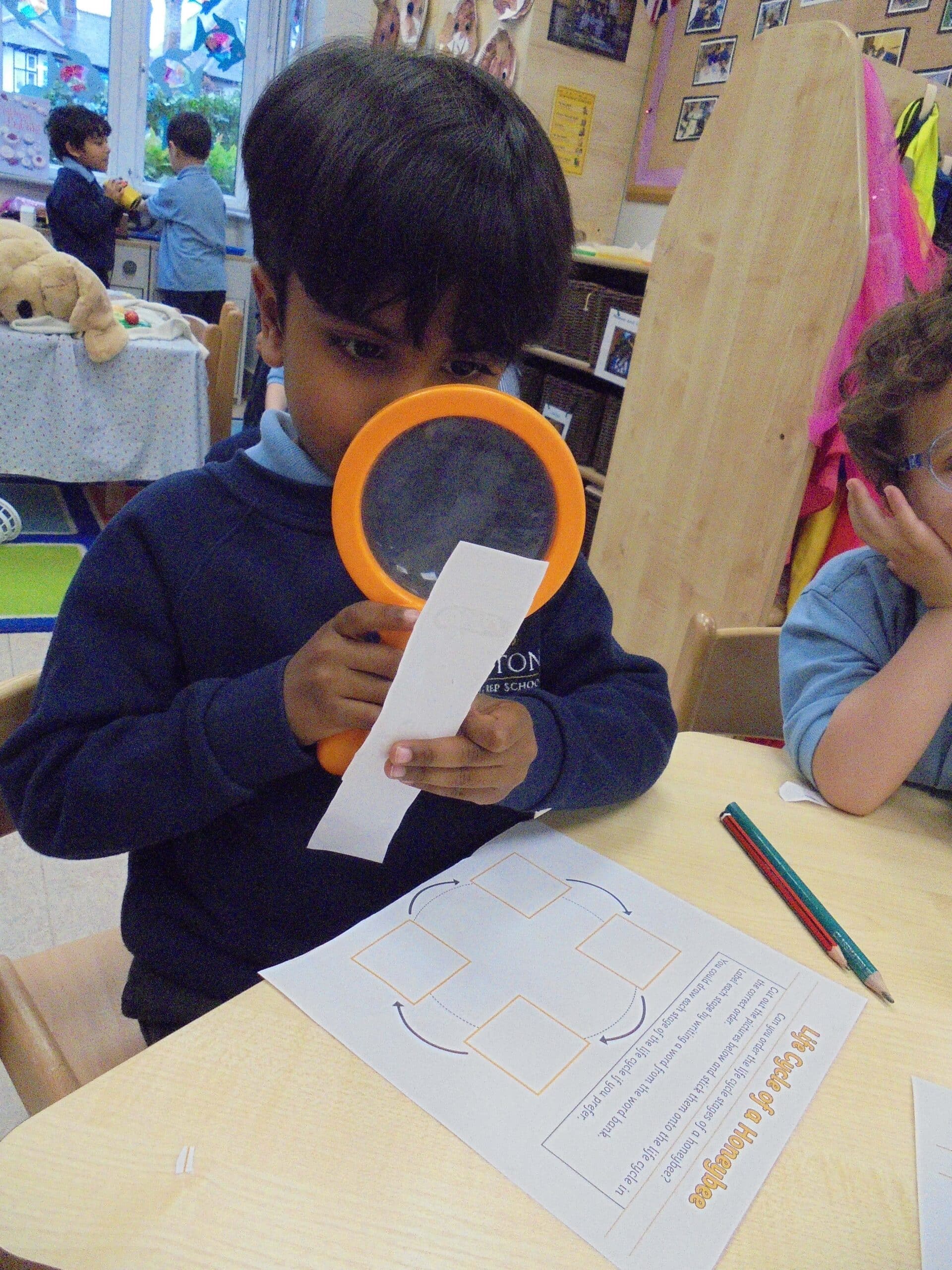
We also enjoyed exploring Mrs G’s beekeeping equipment, such as the hive tool, queen catcher box, bee brush and her special gloves. She explained the different roles within the hive: the worker bees, who are all girls, fly out to collect nectar and pollen, packing it into the pollen baskets on their third pair of legs before returning to pass it on to another bee. The drones, who are the boy bees, have a much simpler life — they mostly eat honey and sleep. In the autumn, the guard bees push the drones out of the hive and protect the entrance to stop them returning over winter, as they would eat too much of the honey the colony needs to survive.
Mrs G also told us that bees can travel up to three miles from their hive in search of flowers, and that each flower has slightly different pollen. We were amazed to learn that bee’s fan their wings over the nectar to evaporate the water to get the right water content sealing each cell with wax.
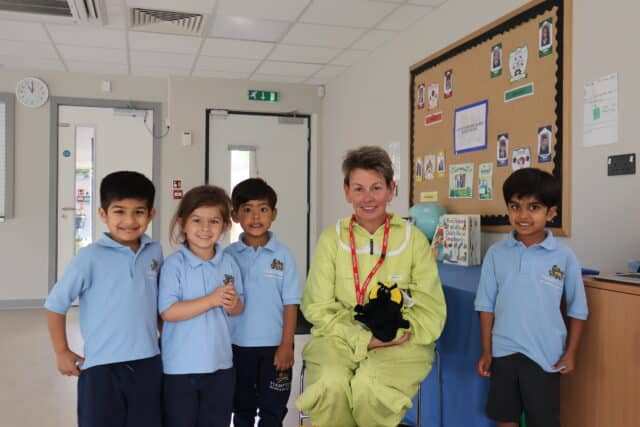
Inspired by everything we learned, we made our own bee watering station for the Early Years garden. Sometimes bees become exhausted because their wings are small and the pollen they carry can be heavy, so they need a safe place to rest and have a drink.
What a lot we know about bees now – and how important they are for pollinating our fruit trees. Our most important job is helping to protect them in the environment.
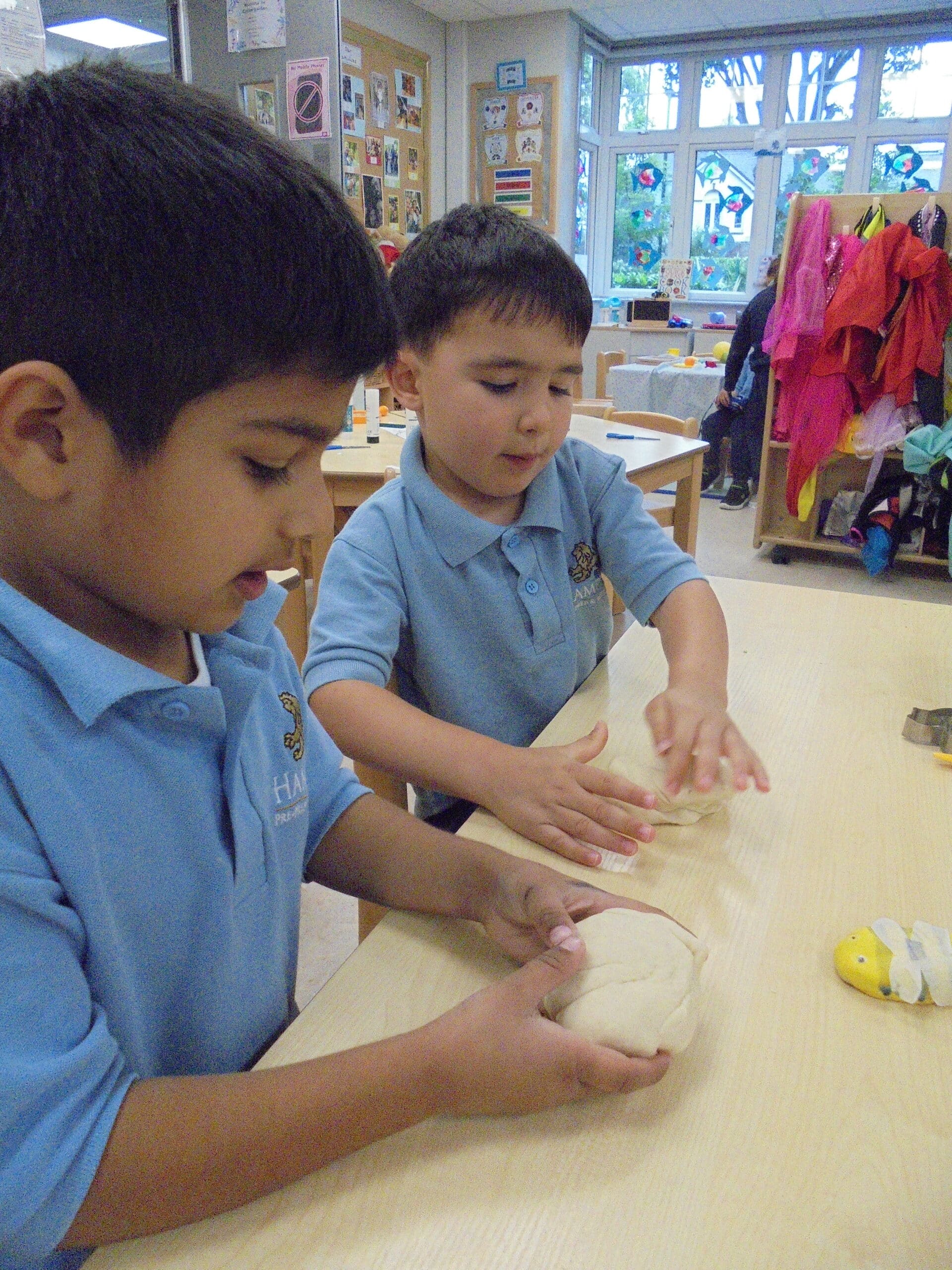
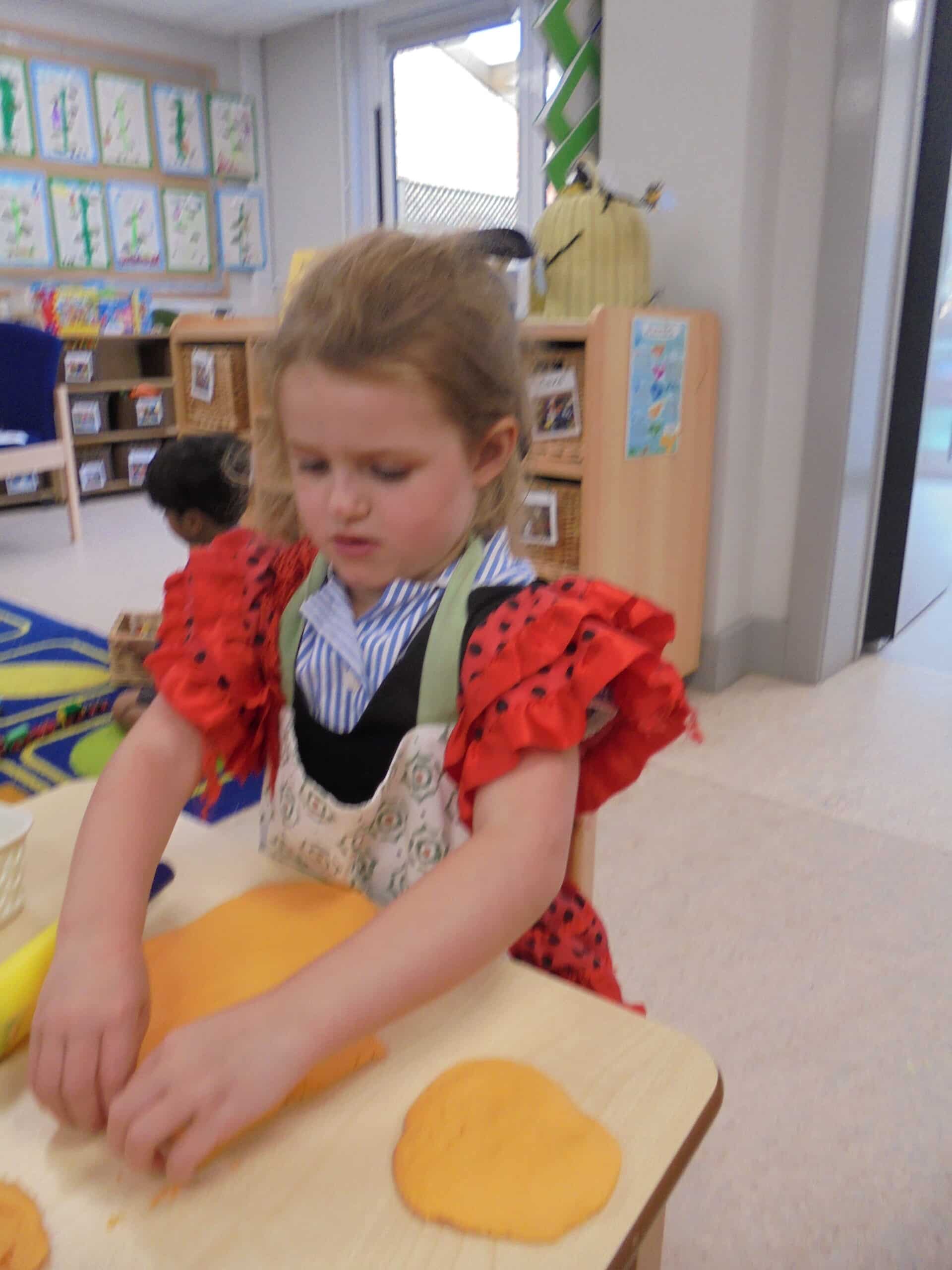
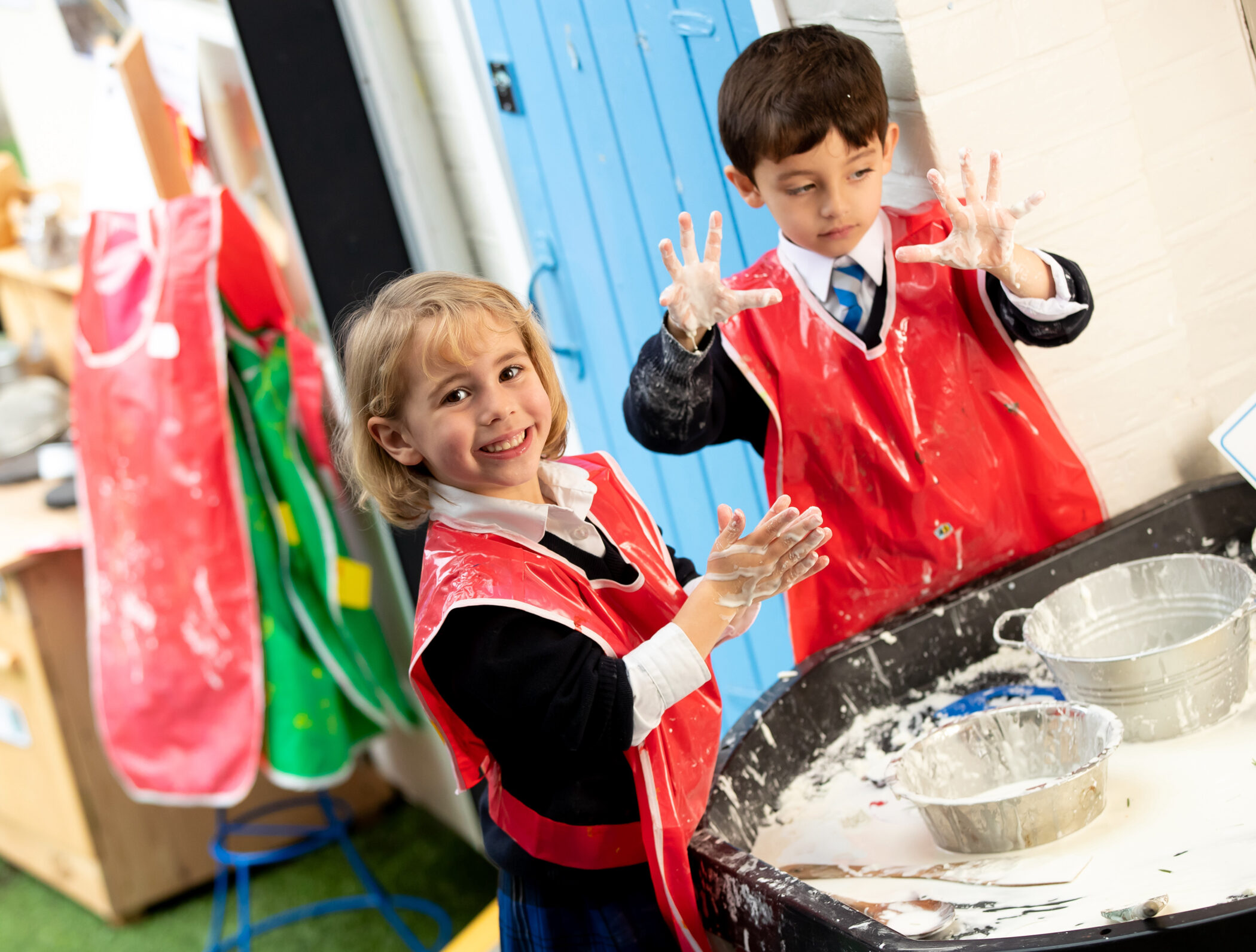
We enjoyed making our own bee models using salt dough. We made modelled the dough into the shape of a bee. We look forward to painting them when they have hardened.
Congratulations to Ishaan for being awarded player of the week at his cricket club.
Our topic next week is caterpillars.